








Proctors Collaborative advances innovative partnership to create dedicated actor housing in Albany
ALBANY — After years of piecing together short-term apartments for visiting performers, Proctors Collaborative is moving forward with a long-envisioned solution creating dedicated housing for Capital Repertory Theatre artists, embedded within a larger mixed-use development now under construction near downtown Albany.
“This is an investment in our artists and in the future of theREP,” said Proctors Collaborative CEO Philip Morris. “By creating housing that’s purpose-built for performers, we’re improving quality of life, reducing operational costs, and making Albany an even more welcoming home for world-class talent.”
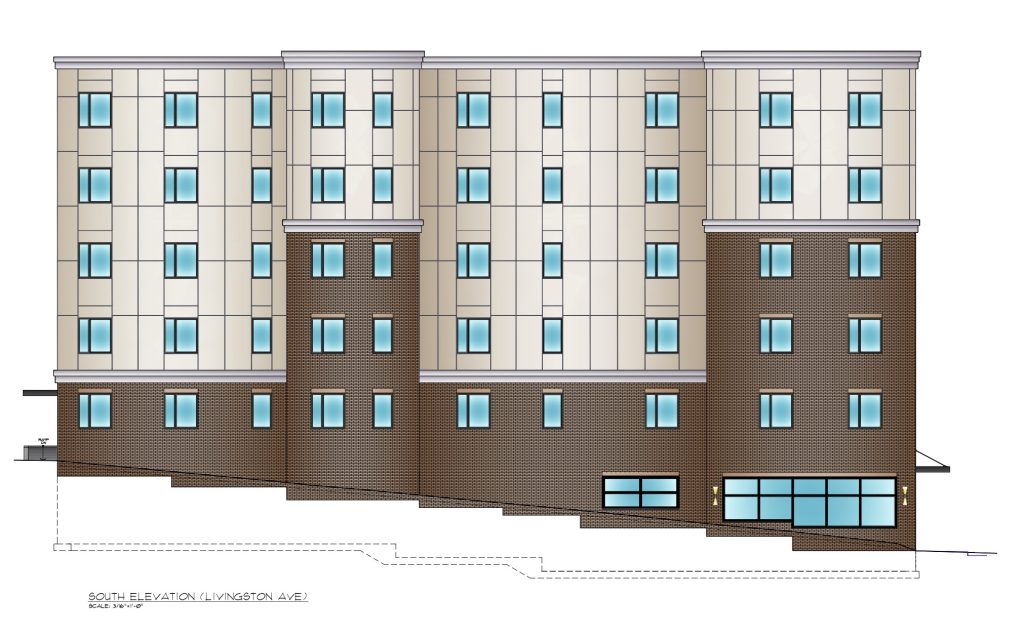
Designed specifically with artists in mind, the new housing will bring performers together on a dedicated floor just a short walk from the theatre, strengthening community while dramatically improving day-to-day logistics. The centralized location will simplify transportation for stage management, provide consistent access to parking, and offer comfortable, reliable accommodations throughout each production cycle.
Construction began in late September 2025 on Clinton Square Studios, a roughly $30 million mixed-use project at the corner of Livingston Avenue and North Broadway. The development will include 67 residential units overall, along with ground-floor commercial or gallery space, as part of a broader effort to revitalize the Clinton Square/New Livingston Avenue corridor.
Within that larger project, 10 studio apartments are being set aside specifically for theREP actors and theatre professionals — the first time Proctors Collaborative has secured purpose-built, long-term housing for its visiting artists.
“This is a remarkable opportunity to ease a longstanding financial burden on the theatre while helping to share more affordable housing options with our neighbors,” added theREP’s Producing Artistic Director Miriam Weisfeld. “TheREP is grateful to further deepen our commitment to Arbor Hill, Clinton Square/New Livingston Avenue, and Downtown Albany.”
The project is being developed by Equity Residential Development as a single, integrated building. While the theatre’s housing occupies one dedicated floor, it is not being constructed separately; rather, it is part of the unified development, with some funding streams specific to the artist housing component.
To make the theatre portion feasible, theREP contributed a property donated some time ago by board member Sherry Gold and secured a $1 million capital grant from the New York State Council on the Arts (NYSCA). That grant supports only the 10 theatre-designated units — an unusual move given the project’s shared ownership and mixed-use structure.
“This kind of arrangement is not easy to pull off,” Morris said. “We had to invent a model that worked for everyone.”
Under the agreement, theREP will lease its floor of units for 30 years and participate in a condominium association with the broader development. At the end of the compliance period required under the low-income housing tax credit program, ownership of the theatre’s portion of the building will transfer to theREP.
The remaining 57 units in Clinton Square Studios will serve low- and moderate-income residents. The project aligns with Albany’s Downtown Revitalization Initiative strategic plan, though DRI funding was directed to the overall development rather than directly to the theatre housing component.
Morris emphasized that the project grew out of mutual problem-solving between neighbors. Proctors Collaborative needed a permanent artist housing solution, while the adjacent developer required access to the vacant parcel to realize the full scope of the development.
“Partnering allowed both goals to happen,” Morris said. “It’s a real example of innovation.”
Capital Repertory Theatre, the only League of Resident Theatres company in the Capital District, has been affiliated with Proctors Collaborative since 2013. The company moved into its current home at 251 North Pearl Street in 2021 following a $14 million renovation of the historic building.
Once complete, with initial occupancy expected shortly after construction concludes in late 2026, the project is expected to reduce long-term housing costs for the theatre, deepen artists’ connection to downtown Albany, and further position the city as a growing hub for arts, culture, and creative economy development.

Theatre lovers attend Season Announcement Bash
Proctors Collaborative unveiled its highly anticipated 2026-27 seasons for Proctors in Schenectady and Capital Repertory Theatre in Albany 7 p.m. Monday, March 9 on the MainStage at Proctors. This year’s announcement carried added significance as it launched the 100th anniversary season of Proctors, marking a century of arts, entertainment, and community... Read more » ... Read More
A revolutionary collaboration comes to Albany
Capital Repertory Theatre brings “Archduke” to Albany in a regional premiere collaboration with Philadelphia’s Tony-Winning Wilma Theater Albany theatergoers are getting a front-row seat to history — with a twist. Capital Repertory Theatre cracks open the explosive, darkly funny world of “Archduke,” Rajiv Joseph’s reimagining of the events that sparked... Read more » ... Read More

Creating magic behind the scenes at theREP
Unseen hands, precise timing, and creative craft bring the stage to life ALBANY — It’s easy for audiences to marvel at a powerful performance, a moving monologue, or a sweeping musical number, but none of it works without the careful, skill-intensive work backstage. The technicians, prop masters, set builders, lighting... Read more » ... Read More

2025 Central New York BroadwayWorld Awards
The nominations are in and Proctors Collaborative has been recognized! These nominations are decided on by the public and we’re so grateful that our shows came to mind for this recent season. Voting ends 11:59 p.m. Dec. 31 and we’d appreciate your vote. Need a Proctors Collaborative cheat sheet? ... Read More

Celebrate the season at theREP’s holiday party!
Join Capital Repertory Theatre and Toys for Tots for a joyful Neighbors for Neighbors event filled with stories, Santa, and holiday cheer You’re invited to Capital Repertory Theatre’s fifth annual holiday party Saturday, Dec. 13, a festive gathering designed to bring families, neighbors, and community members together under one roof.... Read more » ... Read More