


Holding space for local voices
As funding models lag behind changing media habits, Open Stage Media works to keep Schenectady informed and connected.
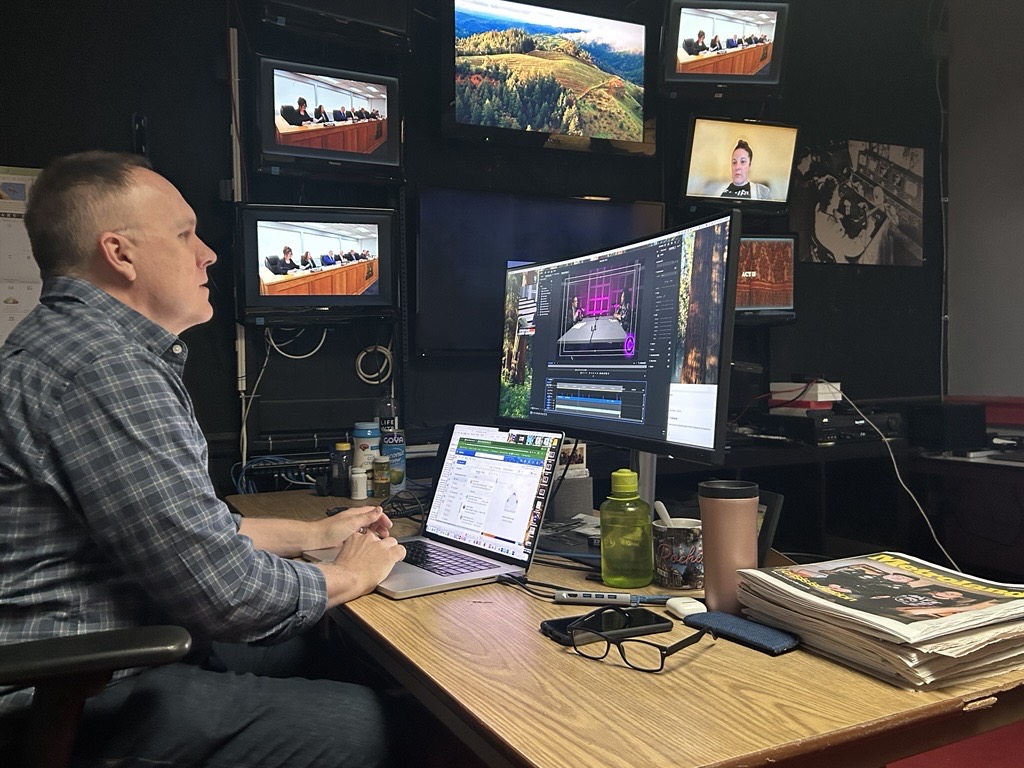
On any given weeknight, Open Stage Media’s small team can be found recording a city council meeting, livestreaming a community forum, or archiving public conversations that might otherwise go unheard. Long a backbone of local civic life, OSM has watched the funding that sustains its programming steadily erode.
While costs have increased and the demands on local media have grown, this funding has remained largely unchanged for years. Cable franchise agreements are typically negotiated every ten years, and public access stations receive only a small portion of those funds.
OSM’s primary source of funding comes from cable franchise pass-through fees administered by the City of Schenectady. These fees are paid by cable providers in exchange for using public rights-of-way to deliver cable and internet service. Currently, OSM receives about $100,000 annually from Spectrum. In addition, OSM has modest contracts with the City of Albany ($10,000) and the Town of Rotterdam ($5,000) to record and publish Common Council and town hall meetings so residents can stay informed about local government.
That system has supported OSM’s work for years. But it is built on assumptions about how people consume media and the media landscape has shifted dramatically. Fewer people watch traditional cable television, yet public access funding is still tied almost entirely to cable revenue. Proposed bills in both the New York State Assembly and Senate are intended to address this disconnect by modernizing how public access media is funded, potentially allowing support to come from streaming services as well. For now, both bills remain stalled in committee. OSM and its partners continue to advocate for more co-sponsors in hopes of moving the legislation forward.
The effects of this uncertainty are real and immediate. OSM currently operates with a very limited staff, managing a workload that would typically be handled by a much larger team. There is no alternative funding streams planned at this time, leaving little margin for error as independent media organizations across the country struggle to survive.
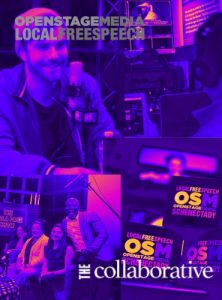
“As we forge ahead, we are grateful to have a home within the Proctors Collaborative — a partner committed to catalyzing freedom of expression and whose mission aligns with Open Stage Media’s goal: to keep local free speech vibrant and enduring,” said OSM Production Manager Zebulon Schmidt
And yet, OSM continues to show up. In a media environment increasingly shaped by corporate ownership and political agendas, OSM remains a nonpartisan source of local information—covering city meetings, community conversations, and stories that rarely find space elsewhere. The continued support of Proctors Collaborative and the City of Schenectady has been critical in keeping that mission alive.
Looking ahead, advocates believe the most hopeful path forward lies at the state level. If New York passes legislation that updates public access funding for the streaming era, independent local media could regain stability and once again have the resources needed to serve their communities fully. National efforts exist but face steeper political and corporate hurdles. For now, states like New York represent the strongest opportunity to protect and preserve public access media while it still stands.
As conversations about the future of media continue, the survival of local, nonpartisan outlets depends on whether communities choose to notice, care, and speak up. For Open Stage Media, that means staying visible, continuing to document civic life, and reminding residents that access to trustworthy local information is not guaranteed—it is something that must be supported and protected. The next chapter of public access media will be shaped not only by legislation, but by the voices of the people it serves.
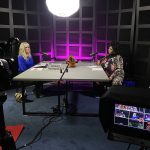
Carla Page brings heart and humanity to local TV
“The Carla Page Show” proves that authentic conversation still has the power to unite a community SCHENECTADY — For nearly 50 years, Carla Page’s inquisitive spirit has been her guiding light for hosting and producing her public access show “The Carla Page Show.” Page brings something special to the community,... Read more » ... Read More
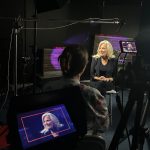
Open Stage Media helps highlight community business leaders
Schenectady Business Award winners to be featured on channel SCHENECTADY—Open Stage Media, an integral community media partner, co-produced videos with the Chamber of Schenectady County to highlight businesses and individuals that positively contribute to the county’s economic vitality and improve the quality of life for all residents. OSM has been... Read more » ... Read More
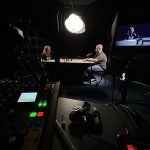
Reel One explores the hidden depth of movies playing at the GE Theatre at Proctors
Open Stage Media’s podcast focuses on history, cultural impact, and analysis of cinema featuring guest experts SCHENECTADY— Hidden gems, cult classics, and cinematic legends come alive again on Reel One, the podcast that rewinds film history with fresh eyes. Produced by Open Stage Media and directed by Zebulon Schmidt, Reel... Read more » ... Read More
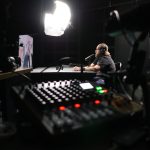
Open Stage Media, public access, find new paths during streaming era
National conference brings representatives together to talk about difficulties facing free speech SCHENCETADY — Proctors Collaborative’s free speech and expression values don’t exist solely on the stage – they spread across digital streams thanks to Open Stage Media. For the last 15 years, Open Stage Media has been an unfiltered... Read more » ... Read More

Open Stage Media elevates local voices independently and unfiltered
Important conversations are brought to public access ALBANY—Open Stage Media is an integral community partner bringing the public important information about local news. Recently, they brought Albany’s Mayoral Candidate forum to their public access channel. The forum featured Dorcey Applyrs, Dan Cerutti, Corey Ellis, and Carolyn McLaughlin with Andrew Neidhart... Read more » ... Read More