







Lee Shaw shaped the sound of the Capital Region
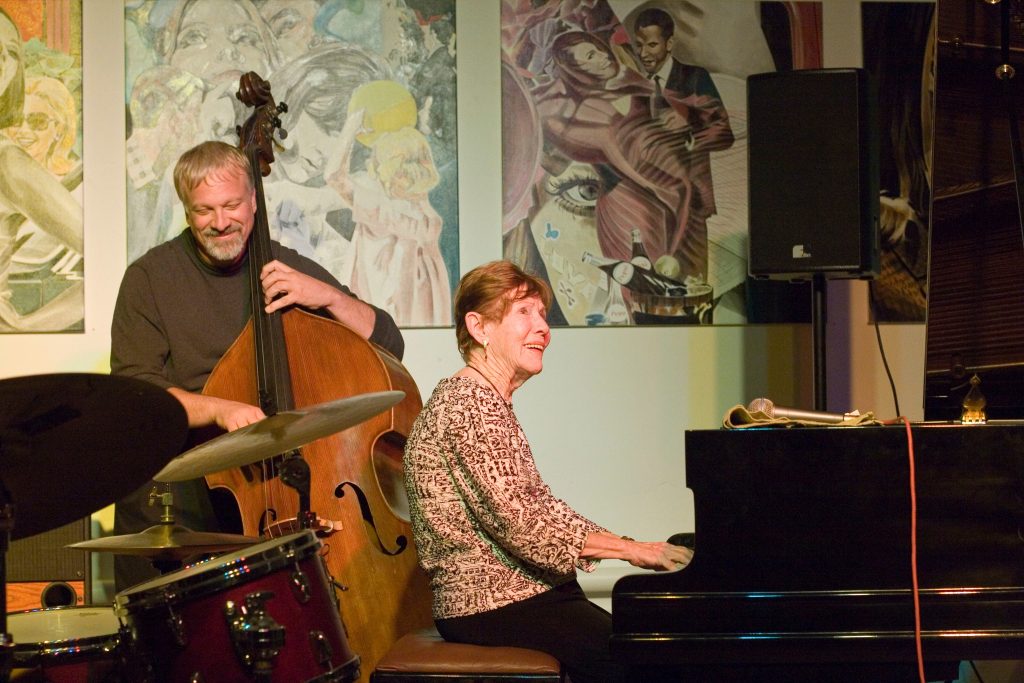
Pianist, educator, and community builder whose artistry and generosity defined generations of jazz in Albany.
Lee Shaw’s induction into the Capital Region Thomas Edison Music Hall of Fame at Universal Preservation Hall is less about a single moment of recognition than it is about a lifetime of devotion. Her life was shaped by music, teaching, and community. She shaped the Capital Region through her generosity, integrity, and quiet brilliance. That legacy still lingers in the musicians she inspired, the students she guided, and in the enduring vitality of jazz in the place she chose to call home.
When Lee Shaw and her husband, drummer Stan Shaw, settled in Albany, they brought with them decades of experience from the national jazz stage. What they built here, however, was something deeply local and enduring. Albany became more than a place to live — it became Lee Shaw’s artistic home. From that base, she helped cultivate a jazz community defined by excellence, generosity, and mutual respect.
As bassist Rich Syracuse recalls, “There’s a community of people that came together because of Lee Shaw. They didn’t come together with her… they came together around her.” Her presence was a gravitational force. She was welcoming, inclusive, and grounded in music rather than ego. “She was incredibly social, very friendly… a very welcoming, loving social person,” Syracuse says. “What you see is what you got.”
In the Capital Region, Shaw was not simply a performer but a defining presence. She appeared consistently in clubs, concert series, and festivals, while also dedicating herself to educational settings, where she set a standard of musicianship that resonated across generations. “Man, what a dynamic, fantastic musician she was,” Syracuse reflects. “She had her own voice.” Drawing from the Oscar Peterson and Bill Evans traditions while remaining unmistakably herself, “her harmonic sense was just impeccable,” and “she was always about the fabric of melody. Always.”
Drummer Jeff “Siege” Siegel, who worked closely with Shaw for over a decade, echoes this sense of singularity. “She was a singular voice, really a brilliant pianist,” he says. “Whenever Lee would play these songs, it wouldn’t be the same — it would be a complete reinvention.” “She was very creative and lyrical, but she also had this powerhouse thing,” Siegel notes.
After Stan Shaw’s health declined, Lee formed a new trio with Syracuse and Siegel, an ensemble that became one of the Capital Region’s most respected and visible jazz groups. While the trio performed nationally and internationally, it remained rooted in Albany, consistently drawing attention back to the Capital Region and affirming its place on the broader jazz map. “No matter where she played,” Syracuse recalls, “it was like we were playing the Blue Note, there was no laying down on the job.” Siegel adds simply, “She always brought her A-game to the bandstand.”
Major festival appearances, European tours, and concert engagements across New York reinforced the idea that world-class jazz was not something that merely passed through the Capital Region but lived here. “She wasn’t a household name,” Siegel acknowledges, “but her impact was enormous.”
Equally transformative was Shaw’s role as an educator. From 1983 until her passing, she served as adjunct faculty at the College of Saint Rose, shaping generations of musicians who would go on to define the Capital Region’s musical life. Beyond the classroom, she mentored countless students privately, offering time, insight, and encouragement with uncommon generosity. “She could relate to people so well. She knew what each student needed,” Siegel explains. “All those people who studied with Lee speak so highly of what she gave them.”
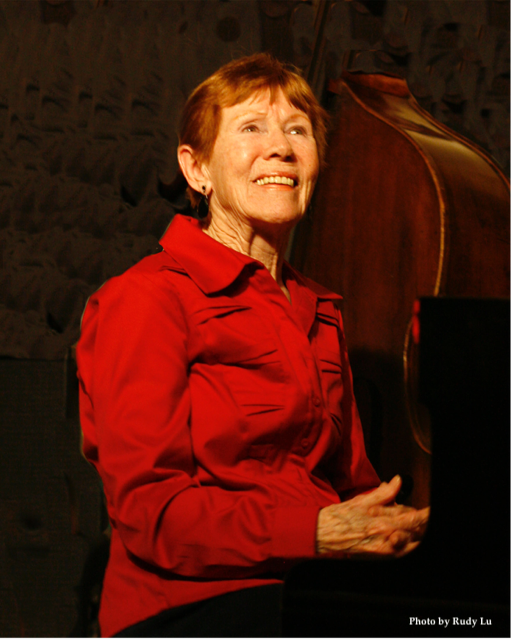
Her influence extended far beyond technique. “Lee wanted us to be authentically ourselves in the music,” Siegel says. Syracuse reflected, “Her legacy is the impact you make on individuals and people you come into contact with.” He added, “There’s a whole generation of younger musicians that studied with her that probably wouldn’t be playing the way they are if it wasn’t for her.”
Shaw also modeled a way of being an artist. “She lived such a simple life,” Syracuse remembers. “It wasn’t about material things for her… she was more of a spiritual artist.” Siegel describes her as “such a kind individual and such a great listener,” someone who could meet a stranger and, “within like a minute, it was like they were family.” Despite hardship, illness, and the obstacles she faced as a woman coming up in a male-dominated jazz world, she remained open, curious, and resilient. “She endured a lot of hardship to do what she did — to be a woman jazz musician,” Siegel says, “and there was nothing that was going to get in her way of getting out there and playing music.”
That commitment never wavered. Syracuse recalls Shaw once saying, “I’ll know when my time has come. I won’t be able to play the piano.” Until then, “she played the piano every day.” Siegel recounts moments when illness threatened performances, only for Shaw to insist, “Just get me to the piano.” He sums it up simply: “She had the heart of a lion.”
Though her career included performances at legendary venues such as the Village Vanguard, Minton’s Playhouse, and the Apollo Theater, and collaborations with many of jazz’s most respected figures, Shaw’s lasting legacy is inseparable from the Capital Region. The strength, continuity, and seriousness of jazz owe much to her presence. Shaw was also inducted into the Oklahoma Jazz Hall of Fame, were a lot of her music and possessions have ended up on exhibit.
Shaw passed away in Albany on October 25, 2015, but her music and influence remain deeply woven into the cultural life of the region. Her induction into the Capital Region Thomas Edison Music Hall of Fame recognizes a life that not only achieved national distinction but elevated an entire community. Through her artistry, teaching, and unwavering commitment to jazz, she ensured that the Capital Region would be not just a place where music is heard but a place where it truly matters.
The inductee ceremony 7 p.m. Monday, March 23 is open to the public and includes musical performances, a social hour, videos on the musical career of each inductee and acceptance speeches. Tickets are on sale now through the Box Office at Proctors in-person, via phone at (518) 346-6204 from 10 a.m.-6 p.m. Monday-Saturday or online by visiting atuph.org.
Universal Preservation Hall and Capital Region Thomas Edison Music Hall of Fame are a part of Proctors Collaborative. For more information on the Hall of Fame visit theeddiesawards.com.
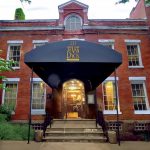
The Van Dyck’s enduring song
From 1947 to its 2026 Hall of Fame induction, generations of owners built a Schenectady institution where music, hospitality, and community became one. In the heart of the Stockade Historic District in Schenectady stands a brick building that has carried the sound of American music since 1947. In March, The... Read more » ... Read More
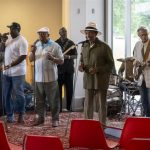
Heavenly Echoes Gospel Band Enters the Hall of Fame
For more than half a century, the Capital Region ensemble has uplifted audiences through faith, harmony, and community. For more than half a century, the Heavenly Echoes Gospel Band has been a constant, uplifting presence in the Capital Region — carrying the sound of gospel tradition from church basements to... Read more » ... Read More
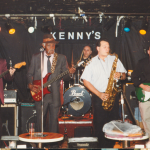
Ernie Williams and a sound that shaped the Capital Region
A legacy of music, mentorship, and generosity rooted in in perseverance and soul Ernie Williams’ life followed the very arc of the blues he so powerfully embodied — a journey born of hardship, sustained by perseverance, and ultimately devoted to uplifting others through music. His story is not only one... Read more » ... Read More
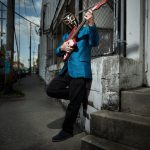
Eddie Angel’s long, strange, joyful trip to the Thomas Edison Music Hall of Fame
From early Capital Region gigs to masked guitar instrumentals and worldwide acclaim, Angel’s career defied convention Eddie Angel’s induction into the Capital Region Thomas Edison Music Hall of Fame at Universal Preservation Hall honors a career that began modestly in Rensselaer, and grew into an international legacy built on persistence,... Read more » ... Read More
On Quail Street, the records still spin
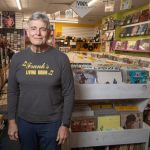
Last Vestige Records founder Jim Furlong earns Hall of Fame honors for a lifetime devoted to music and community ALBANY — On Quail Street, tucked into a stretch of Albany that feels lived-in and stubbornly real, there’s a doorway that has pulled generations of music lovers inside. Behind it is... Read more » ... Read More