




The Van Dyck’s enduring song
From 1947 to its 2026 Hall of Fame induction, generations of owners built a Schenectady institution where music, hospitality, and community became one.
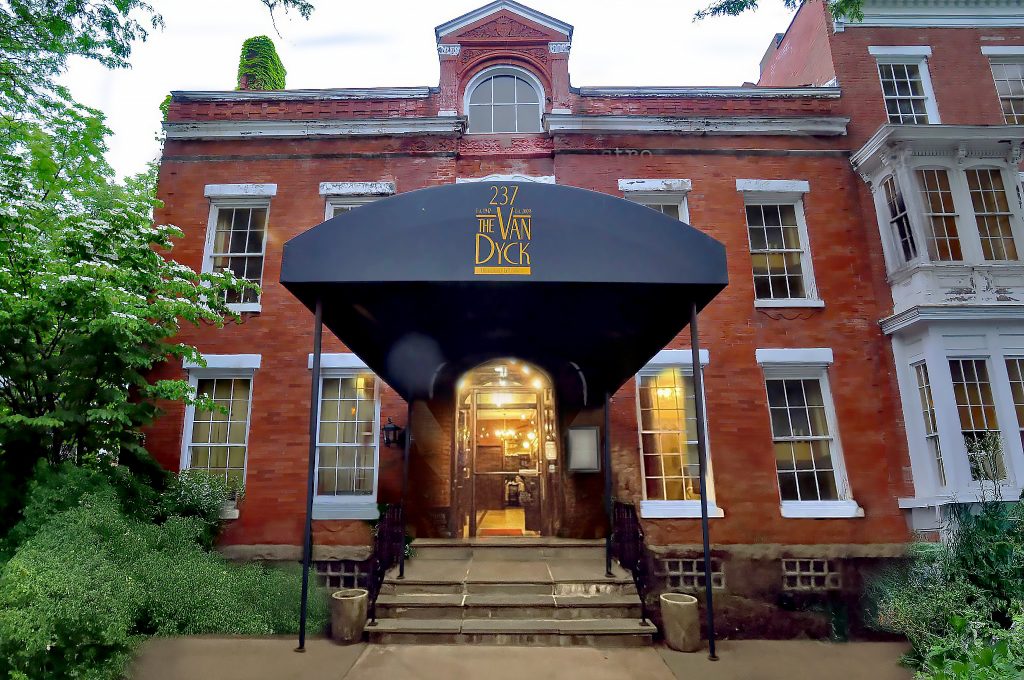
In the heart of the Stockade Historic District in Schenectady stands a brick building that has carried the sound of American music since 1947. In March, The Van Dyck — and the families and stewards who sustained it across generations — will join the Capital Region Thomas Edison Music Hall of Fame Class of 2026, honoring nearly eight decades of music, hospitality, and community in the Capital Region.
Where it all began: a supper club with a bigger dream (1947–1994)
The story began in 1947 when Marvin Friedman purchased a struggling French restaurant on Union Street and transformed it into something visionary. As his grandson Geoff Wexler recalls, “Marvin founded the restaurant with my grandmother… back in 1947. He found a floundering restaurant in the Stockade… and bought it… And that was The Van Dyck.”
Geoff shares how his grandmother Ruth Wexler “brought all her china and pots and pans and was the first cook,” while his great Uncle Marvin ran the front of house and built the music program. “They were always into music,” Wexler said. What began as a piano bar quickly evolved. Later owner Peter Olsen said Friedman, “brought up the finest musicians from New York City to a small club in upstate New York.”
“To me, the Van Dyck was a concept,” Olsen said. “It was a New York City jazz club somewhere north of the city.”
That concept — intimate, artist-focused, and ambitious — defined the room. “You could literally be three feet away from an iconic player,” Wexler said. “I just think that intimacy made it a very special venue.”
Under Friedman and later his nephew Donald Ira Wexler, who joined the business in 1974, the Van Dyck became both a nationally respected jazz-stop and a neighborhood institution. “We were a regular stop for up-and-coming artists as well as people who were more established,” Geoff said.
It was also, unmistakably, a community anchor. “Every night at dinner… my uncle and my father and even my grandmother used to go around the dining room and speak to the customers,” Geoff said. “It wasn’t just a financial relationship — they knew their customers.”
“We were there from ’47 to ’94,” he reflected. “It was great to see the young children’s birthdays and then their high school graduations and then they got married… It was part of their life.”
The original Van Dyck closed in 1994, ending a 47-year run — but not the story.
Saving the stage: reinvention in a city finding its footing (1996–2007)
In 1996, amid a difficult economic period for Schenectady, Olsen and partners reopened the building, eventually with Olsen as sole owner. “When I first saw the Van Dyck, it was in really rough shape,” he said. “We saved the building.”
Olsen led extensive renovations — structural steel reinforcements, a brewery, balconies, skylights, a 40-foot mahogany bar, an upgraded sound system, and a Yamaha concert grand piano — and expanded the upstairs music room to 200 seats. “It was never just the facility; it was the music,” he emphasized. “There are a lot of great restaurants in the Capital Region. The music is what made The Van Dyck special.”
At a time when Schenectady’s industrial base had shrunk dramatically, Olsen doubled down on live performance. “Supporting live music was the goal,” he said. “And I think we did a pretty good job of it.”
Downbeat Magazine agreed too. In 1997, they picked Olsen’s generation of The Van Dyck as one of the Top 100 Clubs On Earth. Sixty of the clubs on the list were in the US, with a large percentage in New York City. Olsen’s Van Dyck was the only club in New York State outside of New York City.
For the first six years, there was live music every night: open mic jams, singer-songwriter nights, jazz sessions, and blues jams. “The open mic jams were a chance for everybody in the Capital Region to come play,” he said. “There weren’t that many places where local musicians could come up, learn their chops, play to a great audience, and with a great sound system.”
Whereas the earlier Van Dyck had been a piano bar, with the acts downstairs, Olsen expanded the club upstairs, doubling the area for performances. National acts returned, too. “We were getting the top acts nationally that were playing in New York City and bringing them north,” Olsen said. “We had the audacity to present them in a small format.”
“The bands brought in 40,000 people a year… people that would not have visited Schenectady otherwise.” For many, the intimacy was the draw: “There’s something to that intimate nature that you get in a 200-seat music club that you don’t get in an arena. It’s a different way to experience live music.”
The club closed again in 2007 in the midst of the global financial crisis, but the building’s musical identity endured.
Keeping the lights on: stewardship and continuity (2008–2022)
In 2008, the building was sold to the McDonald family, longtime local restaurateurs. Under their ownership, the space operated as Mad Jack Brewing Company while continuing to host live music and events. Due to the impacts of the COVID-19 pandemic, Mad Jack Brewing Company closed in 2021. Their stewardship ensured that the Union Street address remained a gathering place — preserving the possibility that the Van Dyck’s musical heartbeat could return in full.
The jazz comes home: revival for a new generation (2022–present)
That revival began in October 2022, when restaurateur Chris Sule relocated Stella Pasta Bar & Bistro into the historic building and launched Seven Points Brewery. Live music returned immediately under the name The Van Dyck Music Club.
“This building has been operating as The Van Dyck since 1947,” Sule said. “A huge part of our community — the arts and entertainment scene here in the Capital Region.”
He leaned deliberately into the venue’s legacy. “Maybe we just name it after The Van Dyck. And that was like a light bulb going off. Of course we leaned into the history.” In October 2024, he formally launched The Van Dyck Music Club upstairs. “A music club is a spot where the attention is on the performers, and there’s a reverence and respect for what’s happening on stage,” he said. “Just like Smalls or the Village Vanguard or Cafe Lena… this is a music club. A listening club.”
Sule sees the continuity clearly. “It’s about preserving that quality and consistency — taking care of the customers, taking care of the musicians, and taking care of the building and the building’s history.”
And once again, the community has formed around the stage lights. “I see guests that have become friends… and it builds this community,” he said. “Once I see you two or three times, you’re part of the community.”
“The music can really bring people’s memories of The Van Dyck back. And I’m glad that we get to create new ones.”
A legacy recognized
For Geoff Wexler, the Hall of Fame recognition is deeply meaningful. “We’re overjoyed that their life’s work is still relevant today,” he said of his family. “It wasn’t just the business, but it was our art to the world.”
Across 1947 to 1994, 1996 to 2007, 2008 to 2021, and into its present chapter, The Van Dyck has been more than a venue. It has been a proving ground for musicians, a dining room for celebrations, a sanctuary for listeners, and a symbol of resilience in Schenectady’s ongoing renaissance.
“There’s a certain effect to seeing a top act in a club,” Olsen reflected.
In 2026, the Capital Region Thomas Edison Music Hall of Fame affirmed what generations already knew, inside those brick walls on Union Street, something enduring was built — not just a stage, not just a restaurant, but a community bound together by live music.
The inductee ceremony 7 p.m. Monday, March 23 at Universal Preservation Hall is open to the public and includes musical performances, a social hour, videos on the musical career of each inductee and acceptance speeches. Tickets are on sale now through the Box Office at Proctors in-person, via phone at (518) 346-6204 from 12-6 p.m. Tuesday-Saturday or online by visiting atuph.org.
Universal Preservation Hall and Capital Region Thomas Edison Music Hall of Fame are part of Proctors Collaborative. For more information on the Hall of Fame visit theeddiesawards.com.
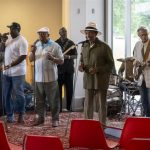
Heavenly Echoes Gospel Band Enters the Hall of Fame
For more than half a century, the Capital Region ensemble has uplifted audiences through faith, harmony, and community. For more than half a century, the Heavenly Echoes Gospel Band has been a constant, uplifting presence in the Capital Region — carrying the sound of gospel tradition from church basements to... Read more » ... Read More
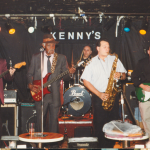
Ernie Williams and a sound that shaped the Capital Region
A legacy of music, mentorship, and generosity rooted in in perseverance and soul Ernie Williams’ life followed the very arc of the blues he so powerfully embodied — a journey born of hardship, sustained by perseverance, and ultimately devoted to uplifting others through music. His story is not only one... Read more » ... Read More
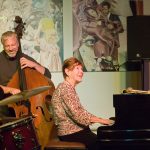
Lee Shaw shaped the sound of the Capital Region
Pianist, educator, and community builder whose artistry and generosity defined generations of jazz in Albany. Lee Shaw’s induction into the Capital Region Thomas Edison Music Hall of Fame at Universal Preservation Hall is less about a single moment of recognition than it is about a lifetime of devotion. Her life... Read more » ... Read More
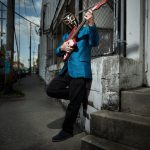
Eddie Angel’s long, strange, joyful trip to the Thomas Edison Music Hall of Fame
From early Capital Region gigs to masked guitar instrumentals and worldwide acclaim, Angel’s career defied convention Eddie Angel’s induction into the Capital Region Thomas Edison Music Hall of Fame at Universal Preservation Hall honors a career that began modestly in Rensselaer, and grew into an international legacy built on persistence,... Read more » ... Read More
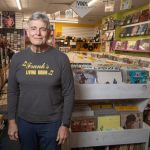
On Quail Street, the records still spin
Last Vestige Records founder Jim Furlong earns Hall of Fame honors for a lifetime devoted to music and community ALBANY — On Quail Street, tucked into a stretch of Albany that feels lived-in and stubbornly real, there’s a doorway that has pulled generations of music lovers inside. Behind it is... Read more » ... Read More