









Laughter and Blood: The Plays of Oakley Hall III
A piece by Justin Knudsen, Senior Grant Writer, Proctors Collaborative
David Filkins grew up on a farm in Ravena and got a job with Lexington Conservatory Theatre (LCT) while he was still in high school. He became their master electrician and worked the last three seasons of LCT, as well as the first Capital Repertory Theatre production, “The Tavern” in 1980. Recently, he stopped by the office to drop off a box of scripts. Inside were manuscripts presumed lost for decades. In a faded blue binder was his personal copy of the production script, marked with lighting cues and scribbled edits, of Oakley Hall III’s play “Beatrice and the Old Man.”
Oakley Hall III was the son of a novelist, a rising star, an enfant terrible; people have called him lots of different things. But most of all he was the charismatic playwright and artistic director of Lexington Conservatory Theatre, theREP’s predecessor, from 1976-1980. It was he who guided the company’s aesthetic vision, a combination of bold spectacle, under-appreciated classics, original work, and sharp comedy. Although Hall’s dramatic story is told elsewhere, including his own 2011 memoir, less attention has been paid to his plays.
Hall studied theatre at the University of California, Irvine, but wasn’t writing plays at that time. Taking an MFA in writing at Boston University, Hall focused on prose, producing a dozen short stories as well as longer works, including “The Archons,” “Nihil Obstat,” and “Alexander Carapace,” all unpublished. John Cheever, one of his professors, provided buoying feedback, but “The Archons” didn’t sell, and Hall focused on playwrighting and theatre when he moved to New York City in 1975. He was auditioning for acting gigs when he met Otis Bigelow, an agent who was also a published playwright.
Hall’s earliest surviving script is a libretto for an opera version of Milton’s “Paradise Lost,” co-written in 1971 with South Coast Repertory co-founder Ron Thronson (the year after Thronson co-wrote “Mother Earth,” the musical that introduced the Captain to Tenille). Hall’s next solo piece was a 1973 play inspired by the work of Alfred Jarry. Beat poet Michael McClure deemed it “unproducible,” and John Cheever apparently concurred. Hall then translated the first two of Jarry’s Ubu plays (a third translation is talked of, but not extant) and penned another script, possibly with Thronson, called “The Uncle God Show,” an episodic phantasmagoria with the trappings of a children’s television broadcast. His next play unlocked an innovative new direction, though its inspiration is unknown. Endlessly rewritten, “Mike Fink” was a sprawling tragedy of blood about the semi-mythical riverboat pilot, rendered in verse, wit, and bloodthirsty spectacle. The subject is most known today as the comic foil to Disney’s Davy Crockett.
In the winter of 1975, shivering in the cold at Lexington House while preparing for the first LCT season, he wrote “Frankenstein,” adapted from one of his favorite novels. He stripped away all extraneous elements and focused on the emotional connection between Frankenstein and the Creature, bathing the audience in lyrical language, voiceover, and the darkness of human violence, yet always centered on the aching relationship between the two men. It was underscored and inspired by the electronic music of composer Judith Martin (later Judith Sainte Croix). Frankenstein’s debut at the end of that first summer was a stunning success. The Creature’s footsteps rattled the Barn Theatre. The sound effect was a distorted recording of iron striking a nearby bridge.
1977 was Hall’s most productive year. Otis Bigelow gave “Mike Fink” to another client, Mandy Patinkin, who asked Joseph Papp to produce a reading for him to star in. Patinkin tapped his old professor from Kansas University to direct it, a Mainer named Peter Clough. Glenn Close, William Hurt, and Dwight Schultz joined Patinkin on stage, decked in costumes and backed by the full muscle of the Public Theatre machine. But Papp was irritated. The script was long, the cast large, and the story centered on the experiences of white men of the rural heartland murdering each other, though at its core was another conflict between father and son. It was a bold examination of American mythos, but not a comfortable fit for the Public. Clough tried to reassure the team as Papp feigned slumber, but Hall was crestfallen when it was passed over.
“A Dying Art” was Hall’s attempt to tack in a different direction. Instead of the dozen characters required for “Mike Fink,” it was a three-hander. His writing professor from Boston University, Ivan Gold, connected him to the legendary Charles Marowitz, an American working in London, running The Open Space Theatre alongside Thelma Holt. Marowitz had made a splash with his extreme adaptations of classic works, as well as his love for Antonin Artaud’s Theatre of Cruelty, an approach that utilized shock and extremity to awaken complacent audiences. Inspired by the suicide of Jacques Vaché, Hall’s new play was a post-apocalyptic, incestuous brew. Marowitz loved the idea, commissioned Hall for £50, but didn’t like the script. Soon after, Thelma Holt, the administrative glue of The Open Space, resigned. Marowitz still wanted a play from Hall to produce. But as The Open Space began to fall apart, so did the chances for a London production. Another disappointment. Hall used the money to buy a new typewriter ribbon.
As The Open Space struggled to stay alive, Hall turned his focus to the idea that Marowitz was most enthusiastic about: “Beatrice and the Old Man,” adapting the Cenci story that had previously been treated by Percy Shelley and Antonin Artaud. The first draft premiered at a reading in Lexington that August.
Two months later, Professor Diane Menaugh organized a Halloween reading of another new play by Hall at Fairfield University. It revisited “Frankenstein” but further pared the story down to just two actors: Michael Hume and Josh Clarke. “A Rewrite of Frankenstein” abandoned sweeping narrative and lyrical horror in favor of a single compressed encounter. The sympathetic Creature of the first adaptation became the ominous Monster of the second. The dramatic action was minimal and dialectic. Modern. Maybe even, post modern, and focused on themes of fatherhood and abandonment with more sympathy for the doctor. Though it was never performed again, this second take at the story reveals evolving themes in Hall’s work.
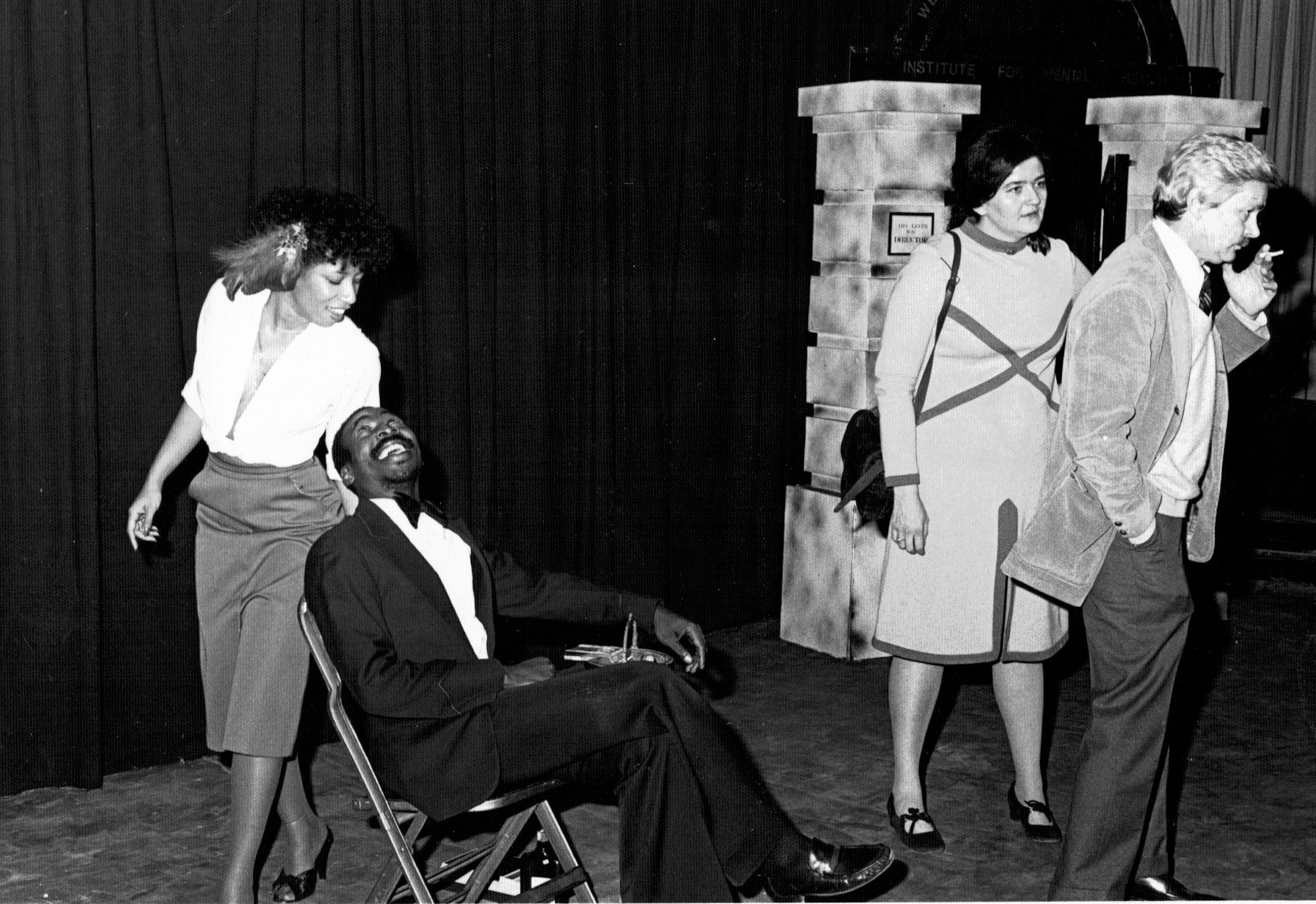
In the winter of 1976, inspired by his job as a receptionist at a mental health clinic, Hall began “Doorman”, a contemporary absurdist comedy. Director William Partlan rescued it from a reject pile and directed it at NY Stageworks a year later. It was one of Hall’s most lighthearted plays, brimming with frustrations of city living and salty lines. “It is a brutal piece of fluff, but in the long run, I think charming,” he wrote in a letter to Charles Marowitz.
As “Doorman” wrapped, “Mike Fink,” rejected by the Public Theatre, found favor with the National Endowment for the Arts. Hall received a substantial grant to write a sequel. (His award was larger than his father’s that same year). Hall began in earnest in early 1978, spinning off the supporting character of Meriwether Lewis. A few months later, Hall completed his draft of “Grinder’s Stand.” William Partlan directed a reading of it at The Phoenix Theatre, supported by dramaturg Anne Cattaneo. It was the second installment of a planned trilogy about the Ohio River Valley.
The 1978 season at Lexington began with frustration. The company had not succeeded in getting another New York production off the ground and was hurting for money. Hall leaned into his Theatre of Cruelty mode, scheduling the premiere of both “Beatrice and the Old Man” and a new adaptation of Christopher Marlowe’s “The Tragical History of Doctor Faustus.”
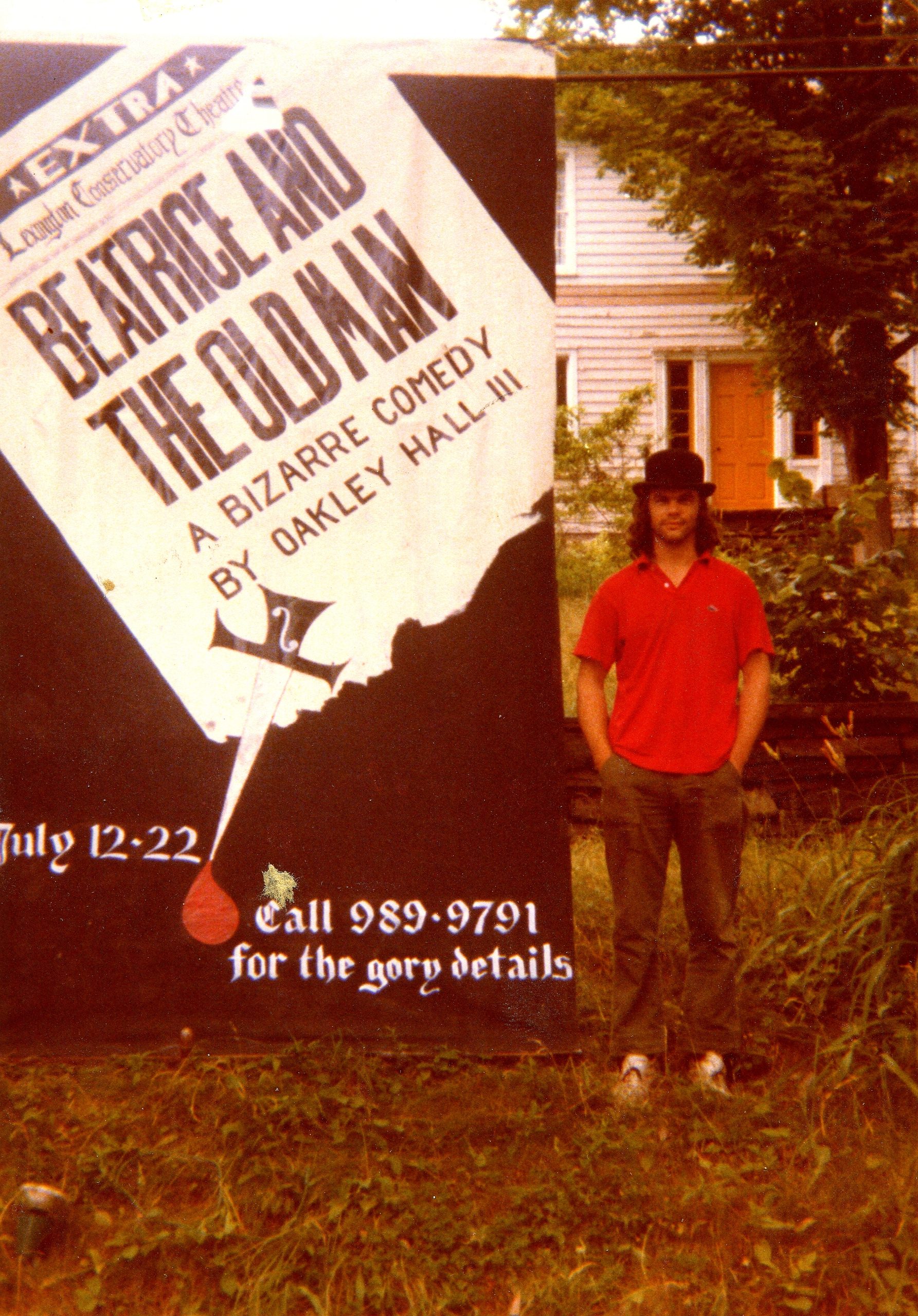
Hall produced at least four distinct versions of “Beatrice and the Old Man.” All the drafts sport gallows humor and maintain the multitude of deaths, as Beatrice Cenci and her siblings rebel against their tyrannical father with tragic results. While the incestuous elements are oft remembered years later, the eponymous Old Man is less a lecher and more of a control freak, to the point of murder. The loyalty he demands is both perverse and pervasive. His motivation is sprinkled with sexual appetite, but what he craves most is his continued domination of the family unit. He’s also very funny, as are the sarcastic supporting characters. But what does it all mean? Is it autobiographical? We tend to read authors’ lives into their words, but with Hall, this may be misleading. The narrative follows the source material closely, and its uncomfortable components more likely reflect his love of shock value than a personal message. It’s a dark comedy, but no less dark than Terry Southern. Where Hall perhaps departed from his goal was in making Beatrice so sympathetic. He wanted her to be less of a cipher than in other adaptations, but doing so had consequences. In a dark comedy, the audience relates to the author’s voice more than to the characters. With a grounded, naturalistic actress such as Sofia Landon, how could audiences not be compelled by her emotional center of gravity? The more we care about what happens to Beatrice, the harder it is to laugh.
The production text was written furiously amid Hall’s deteriorating personal state, fueled by alcohol. Hall wrote new pages every day, and handwritten revisions show an ongoing struggle to land on a unified concept. Director Wendy Chapin knew the play wasn’t ready, but no one in the company seemed able to intervene. Halfway through the run of “Beatrice,” Hall suffered a traumatic brain injury, falling off the bridge that crossed the Schoharie Creek. The common story is that he was distraught that the play was a commercial and critical disappointment. Though in the remote utopia of Lexington, regional press was just beginning to discover the company. Audiences were always small, even when the house was sold out. What would a more successful show look like in that context? One good review, and a few more butts in seats? Or was it that the company felt that the show wasn’t working, and Hall, buckling under immense pressure and personal crisis, couldn’t lead them toward a solution? While doctors in Albany treated his extensive injuries, the company had to finish the season without him. The final show was his adaptation of “The Tragical History of Doctor Faustus.”
Hall always preferred Marlowe to Shakespeare. In his version of “Faustus,” he pared it to the bone, echoing his approach to “Frankenstein.” There are only three main characters: Faustus, Mephistopheles (cast as a woman) and Wagner, the factotum. The environment, supporting characters, and supernatural feats were created and embodied by the ensemble, a robed chorus hypnotically conjuring the alchemy of the tale. Their smocks of rough cloth were hand painted with sparkles of gold at the bottom hems, as if magic itself had made them. Director Peter Clough was left to interpret Hall’s intentions. The show closed the 1978 season in triumph, a tight, magical 90 minutes, though its author never saw it performed.
The following year, “Grinder’s Stand” closed the 1979 season. Hall was back on campus, but unable to truly participate. Returning to direct was Peter Clough, once again interpreting Hall’s provisional text. The play picked up where “Mike Fink” left off. Written loosely in verse, but with a more elegiac tone, Meriwether Lewis, hero of the transcontinental expedition that bore his name, travels to Washington, beset by a conspiracy against him and by his own demons—a laudanum addiction and a sense of unfulfillment. He kicks the habit, but the conspiracy kicks him, though not before his encounter with the widowed Caroline Grinder. Their romantic, touching connection is the culmination of Hall’s artistry. “Grinder’s Stand” was not Hall’s final play before his accident. But it represents a maturing new direction in his fusion of European forms and American themes. In “Beatrice” he juxtaposed the archaic and the contemporary, a mashup of Gothic, Romantic, and Surrealistic. In “Grinder’s Stand” he took European traditions and soaked them in America, echoing George Lippard and Charles Brockden Brown. Along the way, he expressed tenderness and even some tranquility. Lewis yearned for what his old friend Clark finally found—a home, a family, a quiet, fulfilling life.
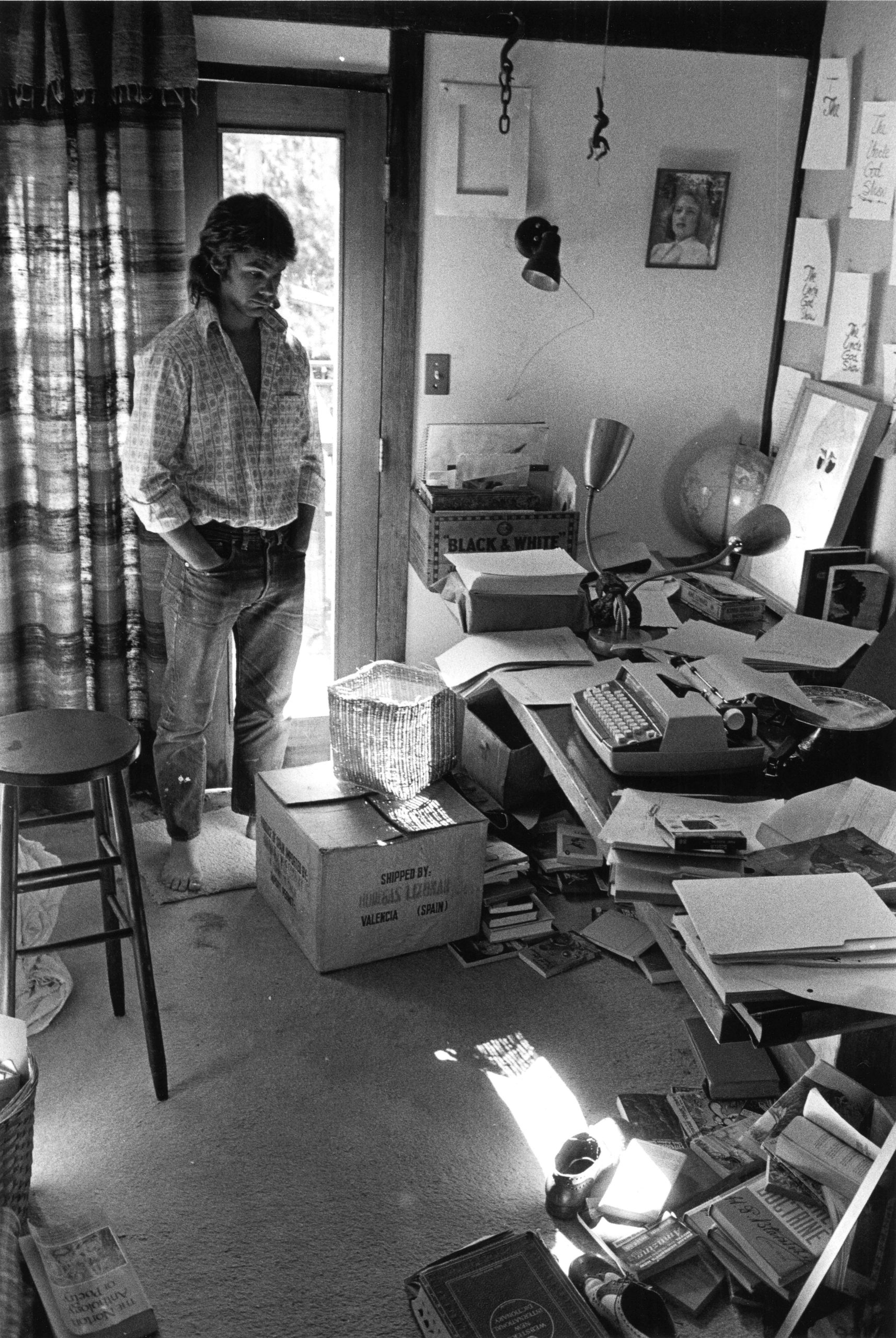
From 1975 to July of 1978, Hall wrote nine full-length plays on a blue Smith-Corona Seventy and completed half of a satirical musical. He wrote rapidly, after spending months gathering notes and ideas and lines with which to fuel his typewriting sprints. Even after his injury, Hall never stopped being a writer, though the process was more difficult, and his work less focused. He revised “Beatrice” extensively and never stopped believing in its potential. A theatre in Ohio premiered “A Dying Art” in 1991. “Frankenstein” and “Grinder’s Stand” received other productions. He wrote new plays: a revisionist take on “Richard III,” a preliminary adaptation of George Lippard’s American gothic “The Monks of Monk Hall,” and a sly memoir, “Jarry and Me.” His manuscripts survived in the keep of family and friends across the country, albeit with some missing pieces. Hall’s adaptions of “Melmoth the Wanderer” and “The Moonstone” have not yet surfaced. His draft of the musical “The Show Must Go On” is unfinished. The script of “The Uncle God Show” remains…enigmatic. The intended third subject for his Ohio River Trilogy is likewise unknown. Only an errant scrap of his essay “Towards a Ubique Theatre” survives. Did he ever write that TV script for “The Andros Targets”? We may never know.
In David Filkin’s production binder for “Beatrice,” we can see a powerful writer frayed by conviction, frustration, alcohol, pressure, marital tension, and perhaps even self-doubt. While the story carries the gleeful bravado that Hall expressed outwardly, the undercurrents, like the context, are more complex. The revisions continued until opening night. On page five, one of the characters dates the events of the play to July 16, the night of Hall’s accident.
There may have been multiple notices for “Beatrice and the Old Man,” but all editions of the Catskill Daily Mail that summer are lost. One lone review survives, from a journalist 70 miles north, who traveled to Lexington for the first time earlier that season. He went with skepticism but left amazed. “Though Mr. Hall’s play still needs tightening, I found ‘Beatrice and the Old Man’ to be a commendable effort,” wrote Dan DiNicola in the Schenectady Gazette. “[It] deserves serious consideration as a work with both potential and merit.” By the time the newspaper was delivered on Monday, July 17, Oakley Hall III was being rushed to a nearby hospital. He never saw it.
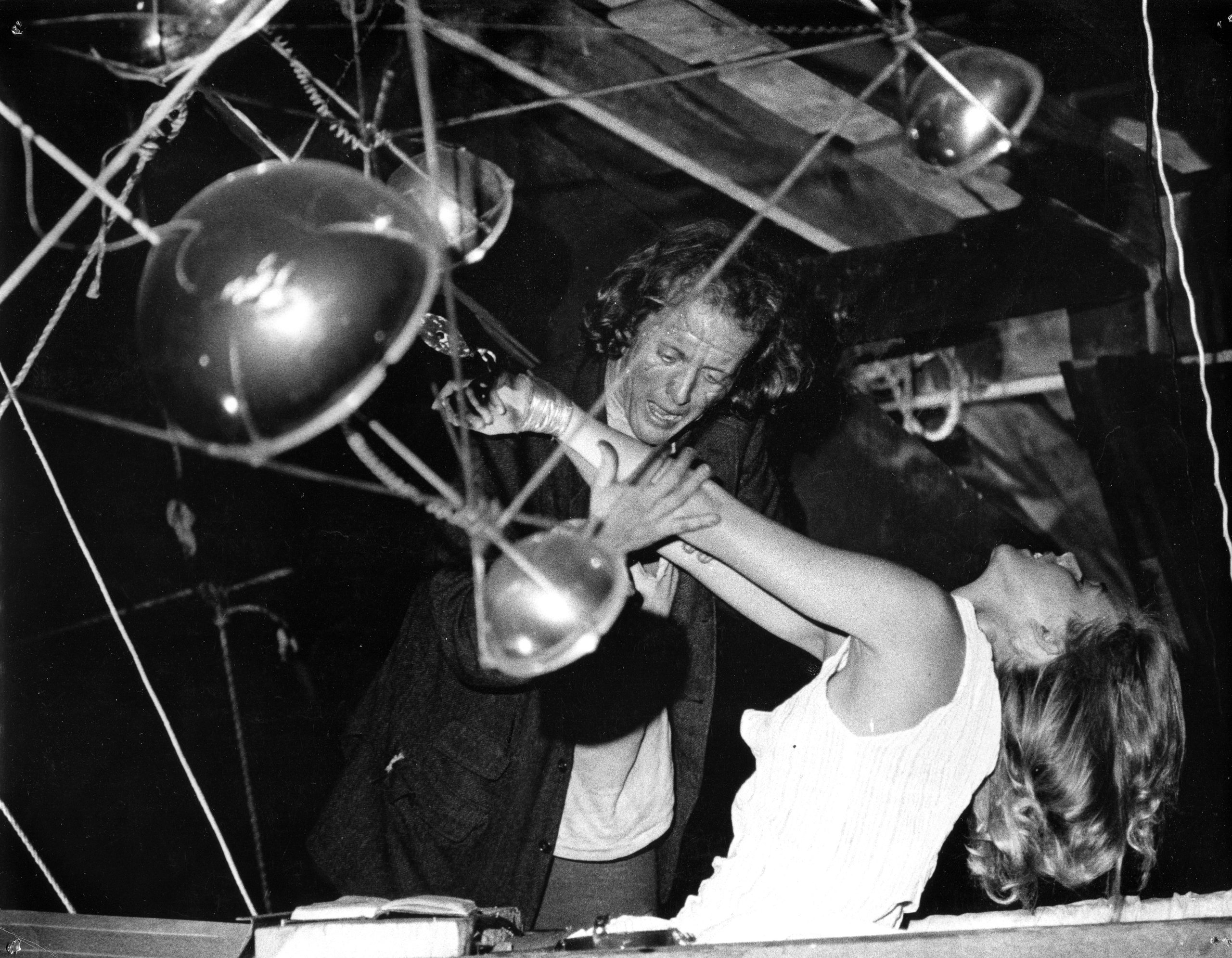
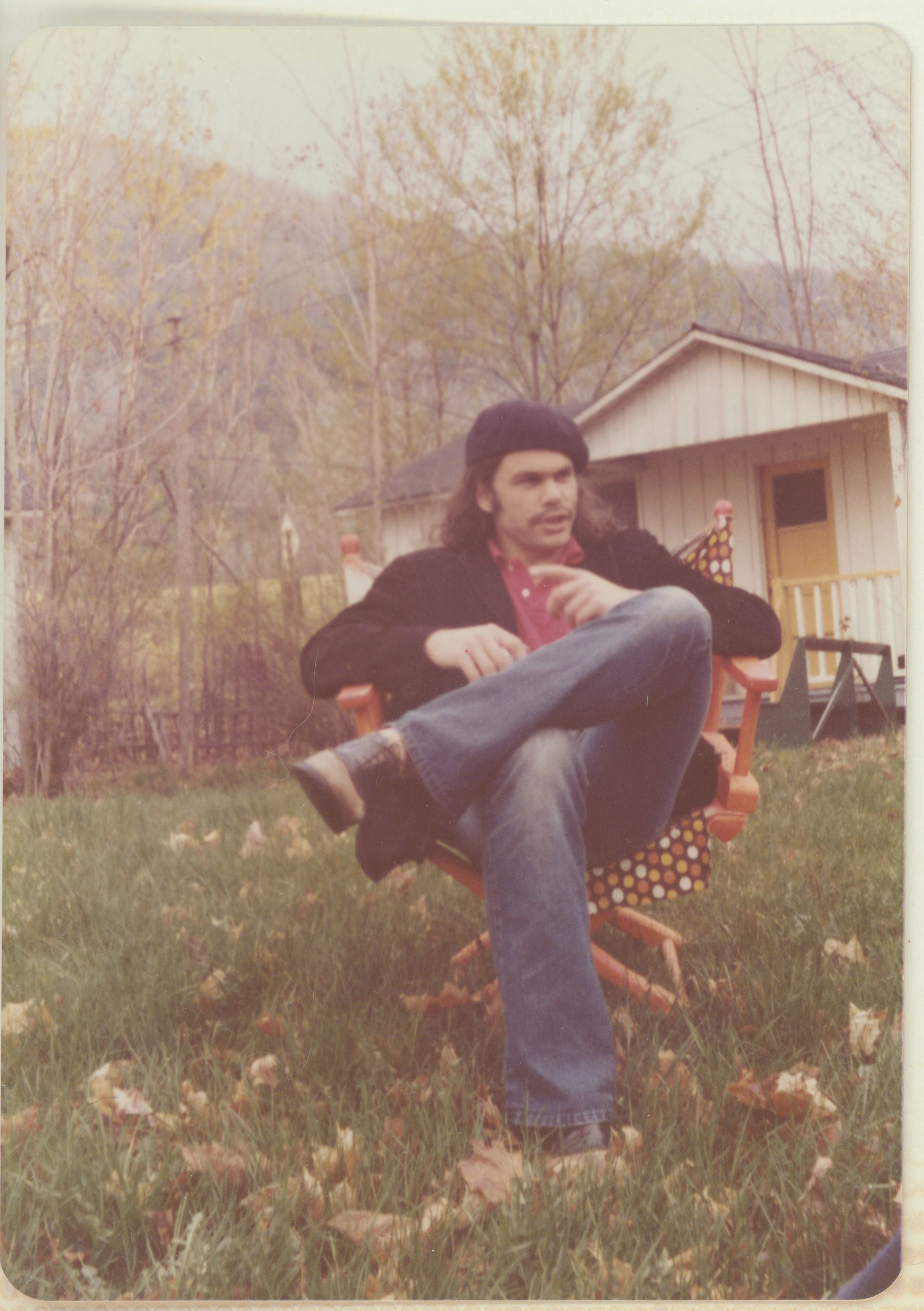
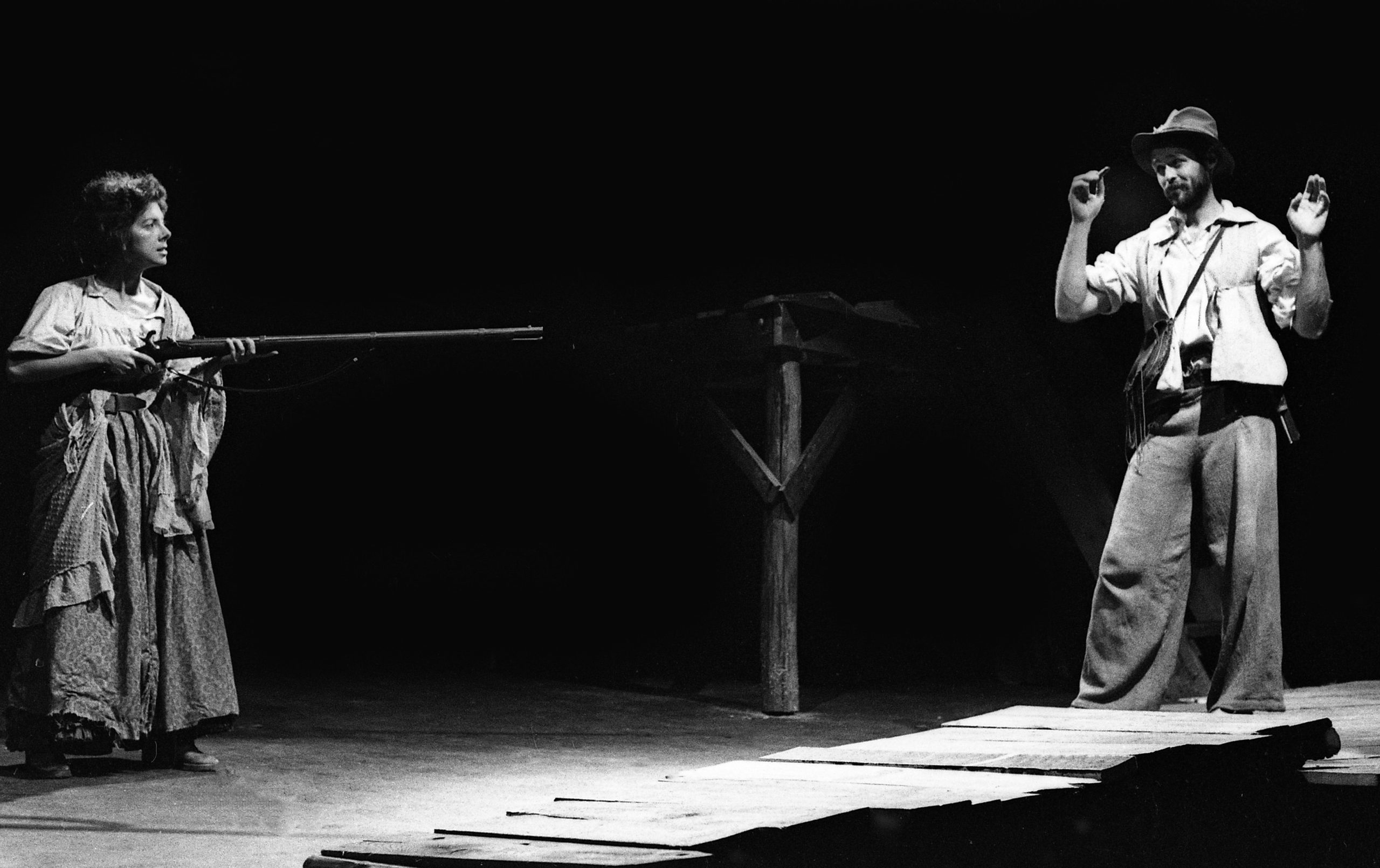
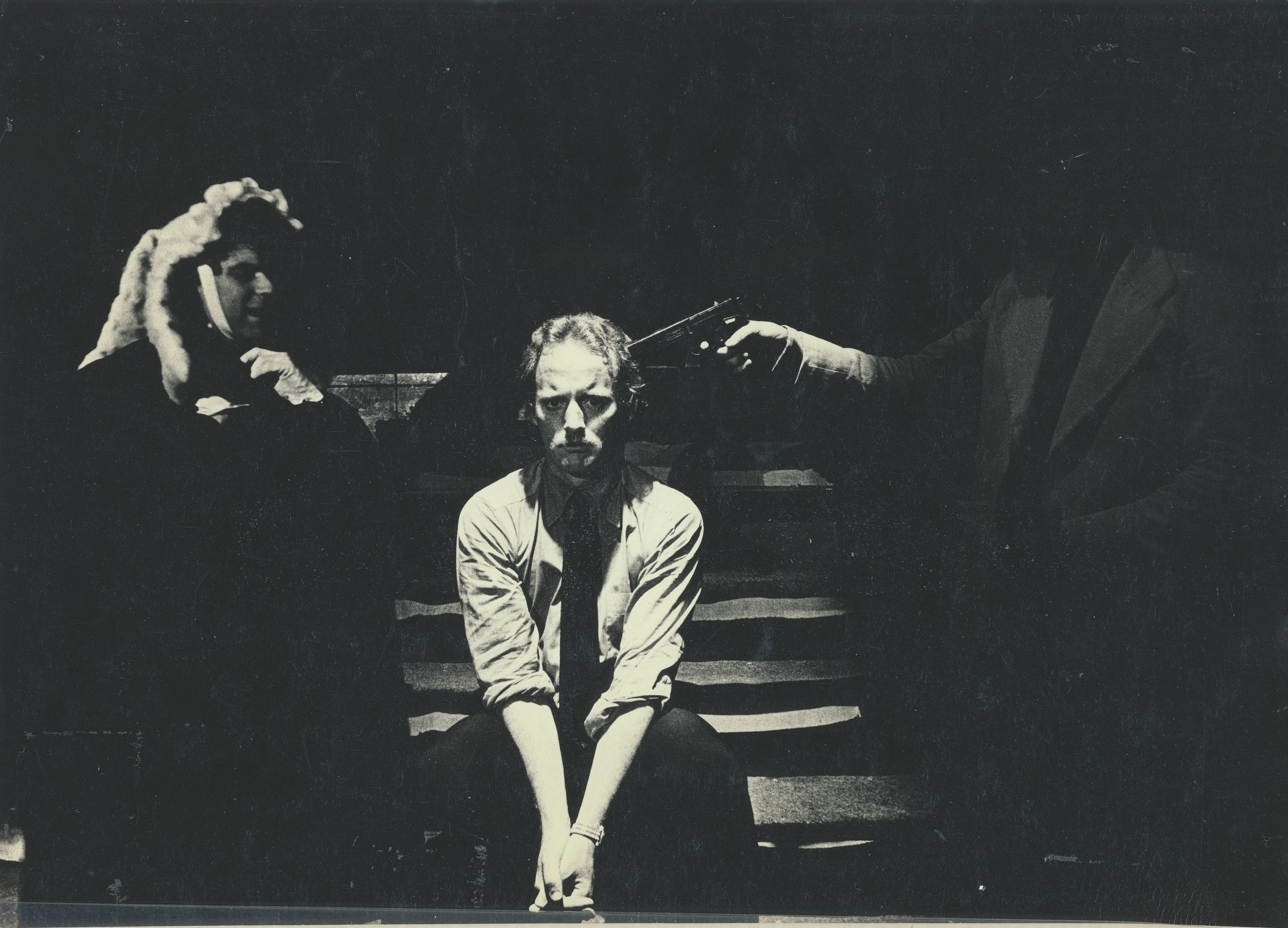
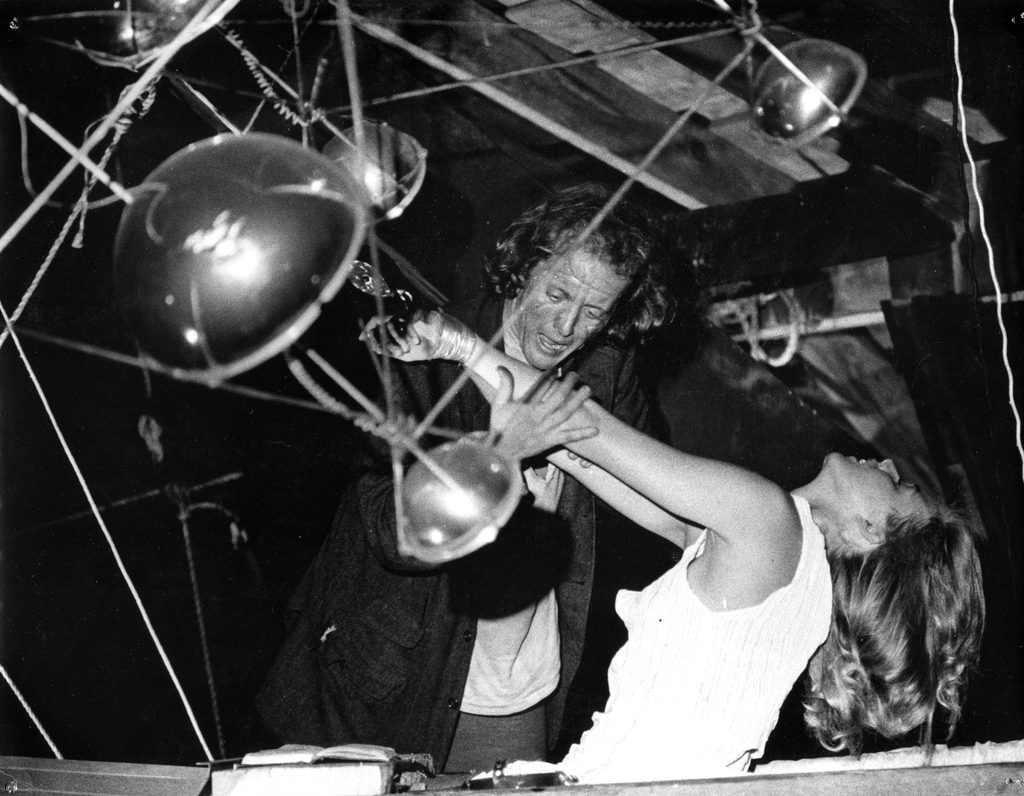
- Oakley Hall III on the grounds at Lexington – photo by Richard Zobel
- Hall in the early 70s with typewriter – photo by Edgar Boyles
- Sofia Landon and Richard Zobel in a scene from Grinder’s Stand – photo by Bonnie Williams
- Michael J. Hume and Forbesy Russell in Frankenstein – photo by Jamie Spracher
- Lorey Hayes, Brent Jennings, Linda Strohmier, Jess Adkins in Doorman – photo by Lee Snider
- Hall posing with the sign for Beatrice and the Old Man, 1978 – unknown
- Steven Rotblatt, Michael J. Hume and Bruce Bouchard in Beatrice and the Old Man – photo by Umberto Casttellanos
Credits: Richard Zobel, Edgar Boyles, Bonnie Williams, Jamie Spracher, Lee Snider, Umberto Castellanos

A note from “The Magi” playwright, Helen R. Murray
Murray is the playwright of “The Magi” and this is a piece about its production at Capital Repertory Theatre this December I think about love a lot. About how, like water through a canyon, it carves and shapes us with a force that we cannot control. We certainly try. We... Read more » ... Read More

Celebrating Our Newest Legacy Society Members
Pictured: Rick Carlstrom (board member), Richard Becker, Jean Leonard (Proctors Collaborative president), Debbie Brown (board member), Peggy Becker (board member), Nancy Willie-Schiff, Sherry Gold (board member), Al DeSalvo (board member), Wendell Lorang, Yono & Donna Purnomo (board member), Paul Wing, Mary & Steve Madarasz (Legacy chairs), and Miriam Weisfeld (producing... Read more » ... Read More
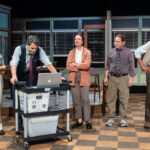
The Last American Newspaper at theREP Sparks Conversation About the Future of Journalism
Arts and culture journalism was a central focus of a recent town hall at Capital Repertory Theatre, held in conjunction with the production of “The Last American Newspaper” by Ken Tingley. The Oct. 3 event, “American Theatre News Now,” brought together national media professionals and local voices to explore the... Read more » ... Read More
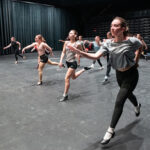
A New School Year Brings New Opportunities with the Collaborative School of the Arts
The 2026-27 school year is underway, and the Collaborative School of the Arts is already helping students across the Capital Region discover their creativity, strengthen their skills, and experience the performing arts in new ways. From hands-on theatrical training to live performances and immersive learning experiences, the education team at... Read more » ... Read More

Marking 266 Years of Live Theatre in Albany
Written by Bennett Liebman, boardmember at theREP The year 2026 marks a major transition in the history of live theatre in Albany. It is the first year without Maggie Mancinelli-Cahill, whose remarkable 30-year tenure at Capital Repertory Theatre ended in 2025. It also marks Miriam Weisfeld’s first full year as... Read more » ... Read More