









Inside the Role of an Intimacy Director
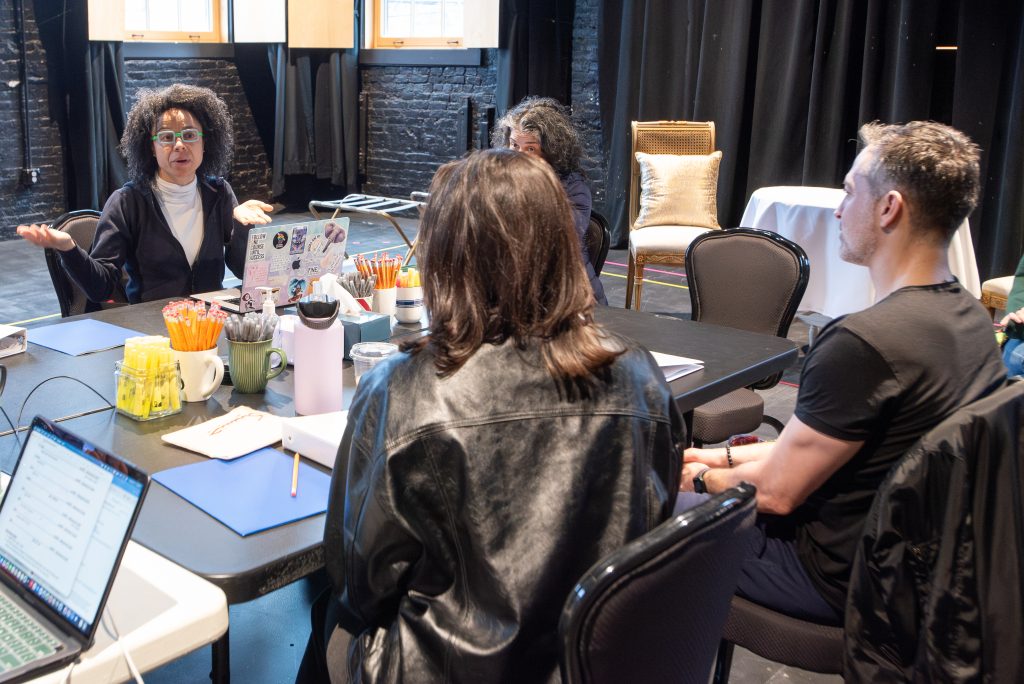
Crista Marie Jackson helps actors navigate consent, connection, and creativity in “Dodi & Diana.”
In a rehearsal room at Capital Repertory Theatre, Crista Marie Jackson moves quietly between actors, director, and script — shaping moments that are as emotionally charged as they are carefully constructed. As the intimacy director for “Dodi & Diana,” her work lives in the space where storytelling, vulnerability, and trust intersect.
Through the physical language of the production, she aims to reflect the evolving dynamics of modern relationships and to give audiences something recognizable, even personal.
Jackson approaches the production with a dual focus of protecting the actors while also deepening the story. “I think it’s twofold,” she explained. “It’s about actor agency while still respecting actor boundaries.” On a set where physical closeness is central to the narrative, she acts as both facilitator and translator, ensuring that every gesture is rooted in consent and clarity.
But her role extends far beyond safeguarding. Jackson sees herself primarily as an artist. “I consider myself first and foremost a creative,” she says. In “Dodi & Diana,” that creative lens is essential. The play explores the complexities of a long-term relationship, requiring intimacy that feels lived-in and authentic rather than staged. Jackson works to craft that realism, bringing “a nuance to those moments that might not otherwise be there.”
Her process begins long before actors’ step into rehearsal. After studying the script and consulting with the director, she establishes clear protocols for how intimate and physical scenes will be handled. “It’s really important that actors are given privacy to discover what these moments can be,” she says. By setting expectations early, she eliminates uncertainty and builds a foundation of trust.
That trust becomes the backbone of the production. Through consent workshops and ongoing conversations, Jackson helps actors develop what she calls a “shorthand for physical communication.” This is especially important in a story that opens on an established marriage — where familiarity and ease must feel instinctive. “A lot of it is trust,” she notes, “really building comfort into who both of these characters are.”
Within that framework, creativity flourishes. Jackson rejects the idea that boundaries limit performance. Instead, she sees them as liberating. “A lot of people think that my job is to limit opportunity,” she says. “And I think my job is to actually discover what we can do.” By clearly defining limits, she creates space for actors to take bolder risks. “Once we know where the fences are, we can run right up to it… and do some really cool stuff.”
The rehearsal room for “Dodi & Diana” has proven an especially fertile ground for that kind of exploration. Working in a collaborative environment, Jackson contributes alongside the director and actors, layering movement and intention together. “What you end up with is something that is elevated,” she says, pointing to the collective nature of the work.
Her choreography reflects that philosophy. Rather than imposing rigid staging, she builds scenes through collaboration, drawing on the actors’ instincts and refining them into repeatable, precise movements. “I’m someone who asks, what feels aligned with what your character would do,” she explains. The result is physical storytelling that feels organic yet remains consistent night after night.
In “Dodi & Diana,” where the line between intimacy and tension can blur, Jackson’s expertise helps maintain that delicate balance. She shapes each moment, so it carries emotional weight without sacrificing safety or clarity. Over time, these moments become second nature to the performers — fully realized pieces of storytelling that audiences experience as seamless and real.
Ultimately, Jackson hopes the impact extends beyond the stage. “Communication really is key on all fronts,” she says, pointing to the broader themes embedded in the work. “I hope… pieces of the audience feel seen,” she says.
In that way, Jackson’s work on “Dodi & Diana” is both invisible and essential — guiding actors, shaping story, and creating space for honesty in its most vulnerable form.

A season about freedom, connection, and community at theREP
At Capital Repertory Theatre, the 2026–27 season comes into focus not as a collection of individual titles, but as a unified exploration of how people live, choose, and connect. For Artistic Director Miriam Weisfeld, the shape of a season doesn’t always reveal itself right away. “You know it’s so funny.... Read more » ... Read More

Friendship is the secret ingredient in “Mystic Pizza” at Capital Repertory Theatre
Before the musical launches its national tour, Albany audiences can experience a heartfelt story powered by the chemistry of its three leading women Some stories endure because they remind us that life’s biggest moments are often shared around ordinary tables, during everyday conversations, and with friends who become family. That’s... Read more » ... Read More

Summer Studio 2026
Headshots Improv Workshop with BTTUNY Dance Rehearsal 7/24 Showcase 7/31 ... Read More

Celebrating the history of Capital Repertory Theatre
Court Miller and Janni Brenn, in “A Streetcar Named Desire.” Photo by Bert Castallanos Why does theREP Exist in Albany? Capital Repertory Theatre might seem like it has always been here. But where did it come from? In faded record boxes are blurry copies of the original articles of incorporation,... Read more » ... Read More

“Mystic Pizza” serves an ’80s-fueled transformation at Capital Repertory Theatre
Hundreds of costumes and split-second changes power the magic behind the nostalgic new musical. Prim, polished, perfect costumes — a staple of every Capital Repertory Theatre production — take months of work behind the scenes. They transform characters and move audiences through time and space. When “Mystic Pizza” takes over... Read more » ... Read More