





“Mystic Pizza” serves an ’80s-fueled transformation at Capital Repertory Theatre
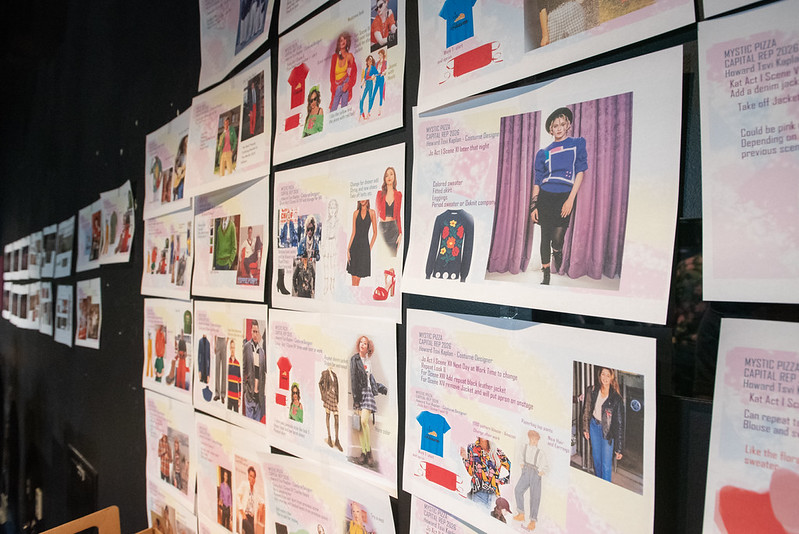
Hundreds of costumes and split-second changes power the magic behind the nostalgic new musical.
Prim, polished, perfect costumes — a staple of every Capital Repertory Theatre production — take months of work behind the scenes. They transform characters and move audiences through time and space.
When “Mystic Pizza” takes over the MainStage at theREP, audiences will see much more than a nostalgic jukebox musical packed with beloved songs and seaside charm. Costume designer Howard Tsvi Kaplan and theREP’s costume shop have been orchestrating hundreds of costume pieces and dozens of lightning-fast transformations that help bring an entire Connecticut community to life.
Based on the beloved 1988 film, the stage adaptation follows the lives, loves, and ambitions of three young women working at a pizza parlor in Mystic, Connecticut. But for Kaplan, the challenge extends far beyond dressing the show’s leads.
“After the seven principal characters, you have eight ensemble people who you have to make a nod to being different characters very quickly and just embracing the whole community of Mystic, Connecticut,” said Kaplan.
Those eight ensemble members will portray as many as 25 to 30 different characters throughout the production, requiring costumes to become an essential storytelling tool. The goal is not to completely disguise performers, but to instantly signal a new character to the audience.
“You have to make sure that people understand at a quick visual image that this is a totally different person,” Kaplan explained. He believes costumes often tell audiences who a character is before they ever speak.
Andrea Adamczyk, Costume Shop Manager, said they have sourced over 300 pieces for the production.
Rather than simply recreating the film’s wardrobe, Kaplan and director Scott Weinstein sought a fresh theatrical interpretation tailored to the actors cast for theREP’s production.
“The people in the movie are not the same people who we’ve cast in the show,” Kaplan said. “So, it’s different body types and they were all going to bring a different interpretation to the role.”
That meant building each character’s look from the ground up, drawing inspiration from iconic ‘80s fashion figures and recognizable cultural touchstones from the era while creating distinct personalities through clothing. Daisy channels the confidence and glamour of Madonna, while Jojo takes cues from Boy George. Kat, meanwhile, reflects a more classic, catalog-inspired style.
Transforming people in seconds
One of the most fascinating aspects of theatrical costume design is how clothing can transform performers almost instantly. In “Mystic Pizza,” some actors will change characters in less than three minutes.
Adamczyk explained there are four wardrobe workers backstage helping actors in and out of their costumes. Along with rehearsing their scenes, actors and wardrobe staff repeatedly rehearse and practice costume changes. Adamczyk described the process as “a type of dance.”
“We have to do the process,” Kaplan said. “Every fitting will be an hour. You start at the top of the show, and you go, ‘Okay, well, first they’re at a wedding and then they have 2.6 minutes to change, but then they become a different person.’”
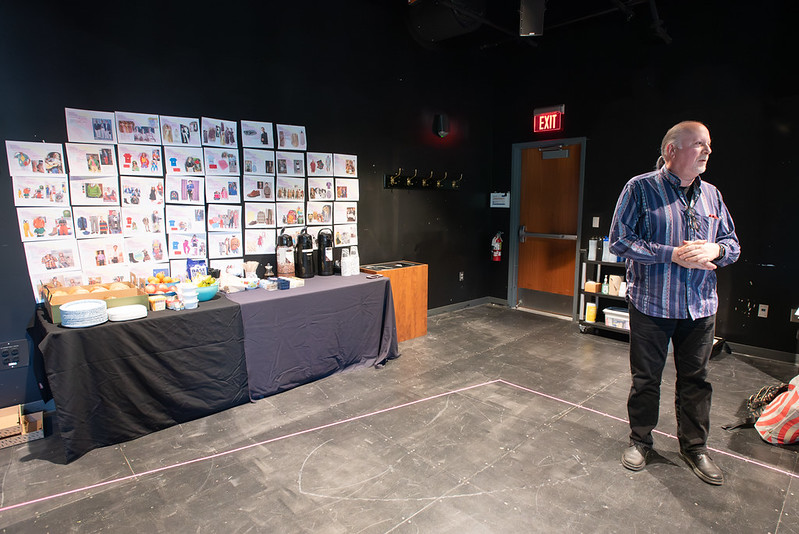
Those transformations require a combination of creativity, engineering, and choreography. Costumes are built with hidden solutions including magnet closures, layered garments and strategically designed pieces that can be removed or added in seconds.
“You can have magical clothes that become something else,” Kaplan said.
A priest’s costume, for example, may share components with a customer or bartender outfit, allowing one performer to transition rapidly between multiple roles through a series of carefully planned costume adjustments.
Adamczyk and her team will spend nearly two weeks doing fittings and alterations to make sure every piece of clothing fits and performs the way it needs too.
“It’s all progression,” Kaplan said. “You can’t say, ‘Oh, well, we’re going to fit the wedding clothes.’ You have to go in sequence and see how it’s going to develop with also the timing in the show.”
Adamczyk added that they can quickly change the identity of a character with a few simple swaps such as a wig and a new sweater.
Capturing the spirit
To recreate the world of “Mystic Pizza,” Kaplan drew on both extensive research and personal experience. Having worked as a young designer during the ‘80s, he remembers the era firsthand.
“I also lived through the ’80s,” he said with a laugh.
His research included fashion magazines, television shows such as “Roseanne” and “Designing Women,” and visual references that helped define the decade’s unmistakable aesthetic.
“Big hair, broad shoulders, this is how people decorated their hair. This is how people liked their jewelry,” Kaplan said. “These are the color palettes that you would use.”
Adamczyk said as a designer, Kaplan doesn’t stray away from using color and creates beautiful pallets for the audience to enjoy.
At the same time, Kaplan wanted the costumes to reflect the working-class character of a Connecticut seaport town rather than a glamorous fashion center.
The result is a colorful blend of authentic period fashion, local character, and theatrical flair.
By opening night, Kaplan and Adamczyk will have put in hundreds of hours to create the wardrobe that helps tell the story of the small town.
Yet for all the logistics involved, the heart of the work remains storytelling.
Through silhouette, color, texture, and quick-change wizardry, costumes help audiences instantly recognize relationships, social status, personality, and place. They turn a cast of 14 into an entire town, transforming performers into wedding guests, bartenders, priests, customers, and pizza shop regulars in a matter of moments.
For Kaplan, that’s the magic of costume design.
When “Mystic Pizza” opens July 11, audiences will witness a remarkable feat of visual storytelling firsthand — one costume change at a time. A cast of 15 transform into an entire seaside community through more than 300 costume pieces, dozens of quick changes, and month of behind-the-scenes craftmanship.
Tickets are on sale now through the Box Office at Proctors in person, via phone at (518) 346-6204 Tuesday-Saturday 12-6 p.m., or online by visiting attherep.org. Groups of 10 or more can get the group advantage by calling (518) 382-3884, ext. 139.
The Last American Newspaper at theREP Sparks Conversation About the Future of Journalism
Arts and culture journalism was a central focus of a recent town hall at Capital Repertory Theatre, held in conjunction with the production of “The Last American Newspaper” by Ken Tingley. The Oct. 3 event, “American Theatre News Now,” brought together national media professionals and local voices to explore the... Read more » ... Read More

A New School Year Brings New Opportunities with the Collaborative School of the Arts
The 2026-27 school year is underway, and the Collaborative School of the Arts is already helping students across the Capital Region discover their creativity, strengthen their skills, and experience the performing arts in new ways. From hands-on theatrical training to live performances and immersive learning experiences, the education team at... Read more » ... Read More

Marking 266 Years of Live Theatre in Albany
Written by Bennett Liebman, boardmember at theREP The year 2026 marks a major transition in the history of live theatre in Albany. It is the first year without Maggie Mancinelli-Cahill, whose remarkable 30-year tenure at Capital Repertory Theatre ended in 2025. It also marks Miriam Weisfeld’s first full year as... Read more » ... Read More

A season about freedom, connection, and community at theREP
At Capital Repertory Theatre, the 2026–27 season comes into focus not as a collection of individual titles, but as a unified exploration of how people live, choose, and connect. For Artistic Director Miriam Weisfeld, the shape of a season doesn’t always reveal itself right away. “You know it’s so funny.... Read more » ... Read More
Friendship is the secret ingredient in “Mystic Pizza” at Capital Repertory Theatre
Before the musical launches its national tour, Albany audiences can experience a heartfelt story powered by the chemistry of its three leading women Some stories endure because they remind us that life’s biggest moments are often shared around ordinary tables, during everyday conversations, and with friends who become family. That’s... Read more » ... Read More